
Loading...
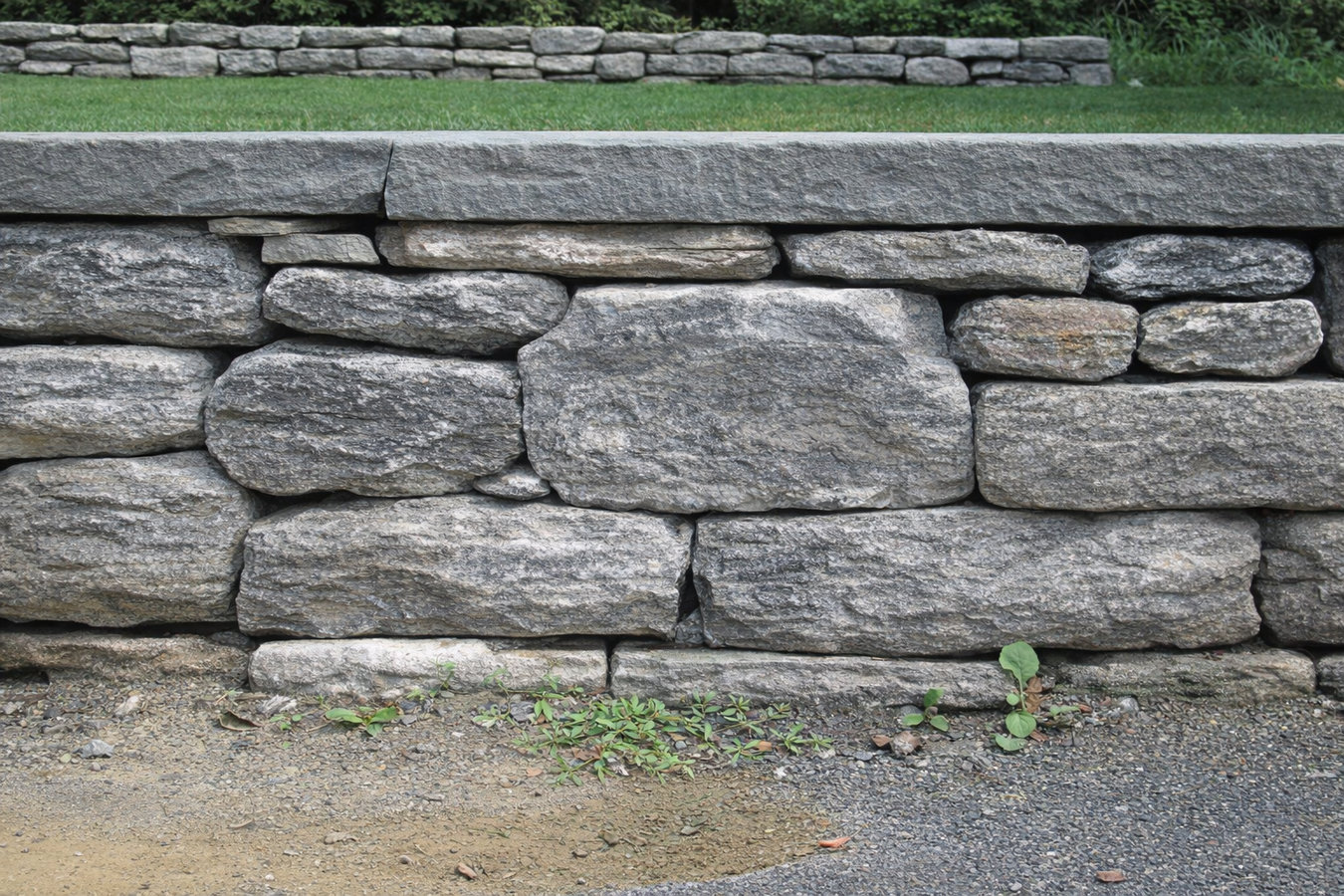
Crumbling mortar, shifting stones, and settling retaining walls are signs your stonework needs real attention. We build and repair natural and manufactured stone features in Champaign with deep bases, freeze-thaw resistant mortar, and drainage built in - so the work holds up year after year.
Stone masonry in Champaign means cutting or setting natural or manufactured stone with properly mixed mortar to build walls, steps, patios, retaining walls, and decorative features - most residential projects take one to five days depending on scope and access.
In Champaign, the work has to account for two things that aren't a factor everywhere: clay-heavy glacial soil that shifts with moisture, and a freeze-thaw cycle that hits mortar joints hard every winter. A stone feature that looks beautiful in October but wasn't built with those conditions in mind will start showing cracks and settlement within a few seasons. If your stonework is showing early signs of joint failure, our brick pointing service can restore the mortar without requiring a full teardown.
Homeowners looking to add the look of stone without the weight or cost of full natural stone often ask about stone veneer installation - a lighter system that achieves a similar appearance and is well-suited for accent walls and facades.
Run your finger along the joints on your stone steps, chimney, or retaining wall. If the mortar flakes off with light pressure or leaves gaps you can poke into, it has lost its binding strength. In Champaign's climate, this is common on stonework more than 20 to 30 years old, and it gets worse every winter. Catching it early means a repair job rather than full replacement.
When stone features shift out of level or develop visible gaps where they meet the foundation or ground, the base beneath them has usually settled or washed out. This is especially common in Champaign because of the clay-heavy soil, which swells when wet and shrinks when dry. A tilting retaining wall in particular can become a safety issue if left alone through another season.
That white residue - called efflorescence - is mineral salt being pushed to the surface by water moving through the masonry. It is a sign that water is getting in somewhere it should not be. In Champaign's freeze-thaw climate, the damage from that moisture will accelerate each winter even if the staining itself looks harmless.
If a stone retaining wall, patio, or steps is no longer directing water away from your home, it may have shifted or been installed without proper drainage. Champaign's flat topography means water has nowhere natural to go, so poorly graded stonework can quietly funnel moisture toward your foundation for years before you notice damage inside.
Every project starts with the base and the mortar mix - the two decisions that determine whether stonework lasts decades or starts failing in a few winters. We excavate to the proper depth for Champaign soil conditions, pack a compacted gravel drainage layer, and select mortar suited to the freeze-thaw demands of central Illinois. For new stone walls and structural features, we build to grade, plumb, and level - then tool the joints so water sheds out rather than pooling in the face of the wall. For repair work, we assess whether the base needs rebuilding or whether repointing the joints is the right call. Our brick pointing team handles mortar-only repairs on existing sound stone structures, which is often the right answer for older Champaign homes where the stone itself is still in good shape.
Homeowners who want the look of stone on an exterior facade without full structural stone weight can combine this work with our stone veneer installation service, which applies a bonded stone facing to an existing wall. Both services use the same material sourcing and mortar standards, so they can be scoped and scheduled together. We handle permits when required by the City of Champaign Building Safety Division, and we contact JULIE for utility marking before any excavation begins.
Best for homeowners who want a one-of-a-kind look with limestone, bluestone, or fieldstone - and who want work that may outlast the house itself.
A good fit for homeowners who want the appearance of natural stone at a lower cost, with consistent sizing that makes installation more predictable.
For homeowners adding privacy walls, garden borders, or grade-change retaining walls that need to handle Champaign's soil movement and drainage demands.
For existing stone features where the stone is sound but the mortar has deteriorated - restoring joint integrity without the cost of a full teardown and rebuild.
Champaign sits in a climate where temperatures swing above and below freezing dozens of times each winter. Every cycle forces water trapped in a mortar joint to expand and contract, widening cracks a little more each time. Combine that with the clay-heavy glacial till beneath the city - soil that swells when wet and shrinks when dry - and you have two forces working against masonry that was not built to account for them. The Natural Stone Institute sets the professional standards for stone installation that guide material selection and joint finishing in climates like Champaign's. Many older neighborhoods near downtown and the university have original stone features from the 1940s through 1970s - much of that original stone is still sound, but the mortar around it is long overdue for attention.
Homeowners in Monticello, IL face the same glacial soil conditions as Champaign, and our crew works throughout the surrounding area regularly. Residents of Urbana, IL are on the same soil profile and freeze-thaw pattern - older stone features on Urbana properties need the same base-depth and mortar standards as any Champaign project. Building for local conditions is not optional here; it is what the work requires.
You describe what you are seeing and what you want done. We ask a few questions to understand the scope and let you know the typical timeline for an on-site visit. We respond to all inquiries within one business day.
We come to your property and look at the work in person - the only accurate way to price stone masonry. We walk you through what we find, explain what needs to happen and why, and give you a written estimate before any work begins. No phone quotes without seeing the job.
For retaining walls, structural work, or anything affecting drainage, we pull the required permit from the City of Champaign Building Safety Division before work starts. This adds a week or two but protects you legally and ensures the work passes inspection.
Most residential projects take one to five days. When done, we clean up all debris and haul away old materials. New stonework needs light foot traffic for 48 hours and should not bear heavy weight for about a month while mortar reaches full strength.
Free written estimate, no obligation. We reply within one business day.
(217) 316-8581We excavate to the depth Champaign's clay-heavy soil demands, use gravel drainage layers beneath every installation, and select mortar mixed for freeze-thaw durability. Work that looks good on day one but wasn't built for these conditions fails within a few seasons.
Many older stone features in Champaign look worse than they are. We give you a straight answer about whether repointing the joints will do the job or whether a rebuild is actually necessary. If repair is the right call, that is what we recommend - not what generates the bigger invoice.
Retaining walls and grading work require permits in Champaign. We handle the paperwork with the City of Champaign Building Safety Division, schedule the inspection, and make sure your project is on record. Your finished work is code-compliant and won't become a problem when you sell.
The Mason Contractors Association of America sets the technical benchmarks for quality stone installation. We follow those standards on every job - proper joint depth, mortar mix, and tooling - because the difference between good and poor stonework shows up most clearly after a few Champaign winters.
Each of these commitments comes back to the same idea: stone masonry in Champaign has to be built for Champaign. The soil, the winters, and the age of the housing stock here create specific demands that generic contractor habits do not meet. We address those demands on every job, the same standard any experienced stone mason brings to work that has to hold up long-term.
Restore failing mortar joints on existing stone or brick without replacing the full structure.
Learn MoreAdd a bonded stone facing to an existing wall for the look of full stone at a lighter weight and lower cost.
Learn MoreSpring books fast in Champaign - reach out now to lock in your spot before the season fills.