
Loading...
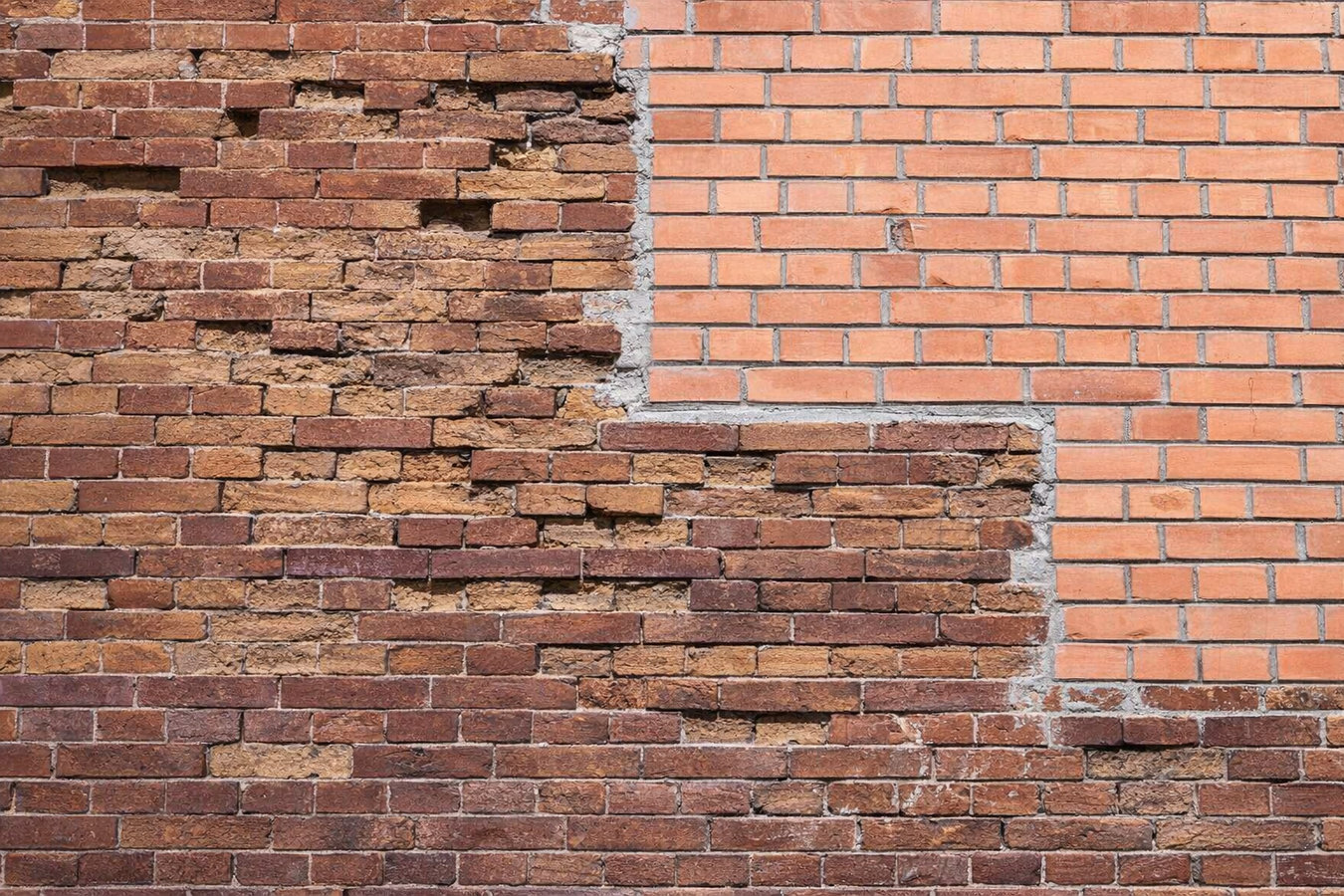
Crumbling mortar, stained brick, and spalling walls don't fix themselves. We restore what's failing before Champaign winters make it worse.
Masonry restoration in Champaign covers repairing, cleaning, and stabilizing brick, stone, and concrete block structures - most jobs take one day to a full week depending on the scope and how much damage has built up over the seasons.
If your home was built before 1970, there is a good chance the mortar between your bricks is lime-based and softer than modern materials. When it fails, water gets in and Champaign's freeze-thaw cycle does the rest. The longer you wait, the more it costs to fix. If your chimney is also showing wear, our fireplace installation service can address related firebox and chimney work in the same visit.
We also work with stone. If your property has stone veneer, natural stone walls, or a stone chimney, a consultation about stone masonry can help you understand the full scope of what needs attention.
Run a finger along the joints between bricks on your chimney, foundation, or exterior wall. If the mortar feels soft, crumbles, or has visible gaps, the seal is gone. In Champaign, this is common in homes built before 1970 after a hard winter - and it gets worse every freeze cycle.
That chalky white residue is called efflorescence. It means water is already moving through your masonry and carrying dissolved minerals to the surface. In Champaign's climate, that moisture will keep doing damage every winter until the source is sealed.
When the surface of a brick starts peeling away in layers or chunks, water has been freezing inside the brick itself. This kind of spalling tends to appear after wet falls followed by hard freezes - a common Champaign weather pattern. Once a brick starts spalling, damaged bricks usually need full replacement.
Champaign's clay-heavy soils shift with the seasons, putting ongoing stress on masonry foundations and retaining walls. Horizontal cracks in a foundation wall deserve quick attention - they can indicate pressure from the soil outside. Stair-step cracks in brick walls are also worth a professional assessment.
The most common restoration task is repointing - carefully removing old, failed mortar to a depth of about half an inch and packing in fresh material matched to your original brick type. On older Champaign homes, this means using a lime-based or softer mortar blend so the repair does not crack the bricks themselves. We also handle spall repair, where deteriorated bricks are replaced individually and blended back into the surrounding wall. Our fireplace installation team can address chimney restoration alongside any firebox work.
Cleaning is often part of the process. Before any repair begins, we remove dirt, biological growth, and any old sealers that could prevent the new mortar from bonding properly. For properties with natural stone walls, chimneys, or veneers, our stone masonry expertise extends restoration work beyond brick to cover every masonry material on your property.
Ideal for homeowners with aging joints on chimneys, exterior walls, or foundation faces - the most common maintenance repair on pre-1970 Champaign homes.
Best suited for walls where individual bricks have chipped, flaked, or crumbled beyond the point repointing alone can fix.
For homeowners with failing chimney mortar, cracked crowns, or efflorescence - often combined with cap replacement and crown sealing.
A good starting point before any repair - clears staining, biological growth, and old coatings so new mortar bonds correctly and the finished work looks right.
Champaign sits in central Illinois where temperatures regularly swing from below freezing in winter to hot and humid in summer. Every time water gets into a small crack in your mortar, freezes, and expands, that crack grows. Over years, this freeze-thaw cycle turns a minor maintenance issue into a crumbling wall. The neighborhoods on Champaign's Near North Side and older sections of southwest Champaign are full of brick homes from the 1920s through the 1960s - homes where the original lime-based mortar was intentionally softer than modern mixes. Using the wrong product on these homes causes more damage than it fixes.
Champaign's clay-heavy glacial soils add another layer of stress. Clay expands when wet and contracts when dry, putting ongoing pressure on masonry foundations and retaining walls. Homeowners in Urbana and Savoy see the same soil-driven cracking patterns. Scheduling a restoration inspection in late winter or early spring - before the post-thaw rush fills contractor calendars - gives you the best shot at catching damage before spring rains drive more water into every crack the winter opened.
Describe what you're seeing - crumbling mortar, staining, cracks, or water getting in. We schedule a free on-site visit and reply within one business day.
We inspect the masonry up close - sometimes with a ladder for chimneys or upper walls - and deliver a written estimate explaining exactly what we found and why. No pressure, no upselling.
Once you agree to move forward, we confirm a start date. Clear vehicles or plants from the work zone - we handle the rest, including covering nearby surfaces to contain mortar dust.
We remove old mortar, pack in fresh material, and clean up at the end of every workday. When the job is complete, we walk you through the finished work before you sign off - fresh mortar needs a few days to fully cure before washing.
Free written estimates. No obligation. We reply within one business day.
(217) 316-8581Using a modern hard mortar on a pre-1960 Champaign brick home can crack the bricks themselves - a mistake that costs far more to fix than the original repair. We select the mortar type based on your brick's composition and age, so the repair holds without damaging what's still sound.
Every homeowner gets a plain-language written estimate explaining what we found, what we recommend, and what it costs - before any work begins. You stay in control of the decision from start to finish, with no surprise add-ons at the end of the job.
We work across the Champaign-Urbana area and surrounding communities, so we understand the specific soil conditions, housing ages, and seasonal damage patterns that affect masonry here. Local knowledge changes what we look for during an inspection - and how we fix what we find.
For homes in Champaign's historic districts, we follow the repair and materials guidance published by the National Park Service Preservation Briefs. That means the repair is done the right way for your building's age and materials - not just the fastest way.
These proof points add up to one thing: you know exactly what you are getting before work starts, and the work is done in a way that protects your home for decades. That is what makes a restoration worth paying for.
Add or rebuild a masonry fireplace and chimney - a natural extension of chimney restoration work.
Learn MoreRepair, rebuild, or construct natural stone walls, pillars, and chimneys on your Champaign property.
Learn MoreSpring appointments fill fast in Champaign - call or request your free estimate now and lock in your date before the post-thaw rush.