
Loading...
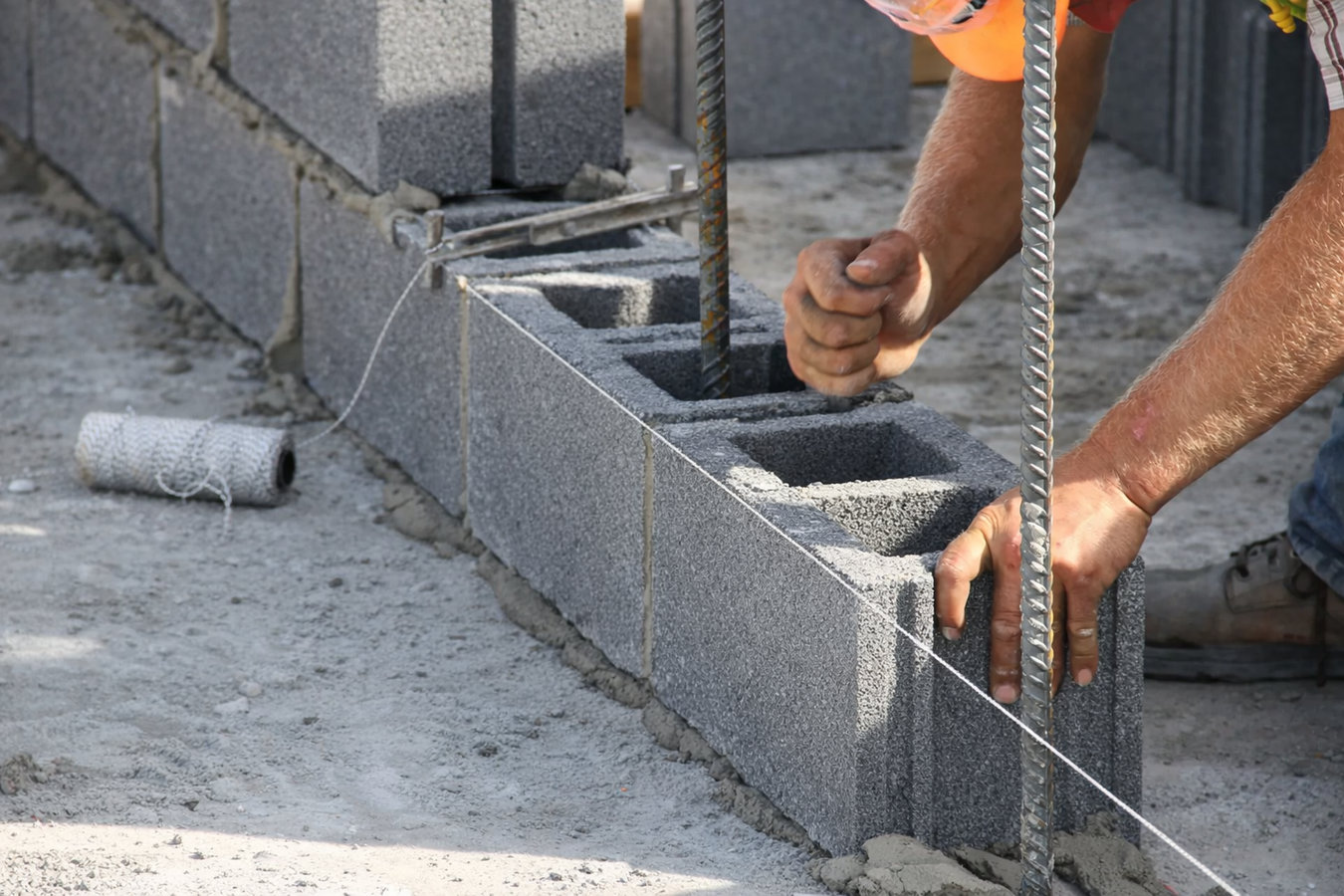
An aging or failing foundation does not get better on its own. We install concrete block foundations built for Champaign's clay soils and hard winters, with proper drainage and waterproofing from day one.
Foundation block wall installation in Champaign means stacking hollow concrete blocks in a grid pattern, filling key sections with steel rods and poured concrete, and applying proper waterproofing before backfill - most jobs run five to ten working days of active construction, with a four-week curing period afterward.
Most Champaign homes built between the 1940s and 1980s used this exact system, and many are now at or past the end of their practical life. If your basement shows horizontal cracks, bowing walls, or water seeping in after rain, your foundation may need more than a patch. We assess the full picture before recommending repair or replacement. If your foundation shows structural movement, it may be worth reviewing our foundation repair service alongside this page to understand where each option applies.
For projects that go beyond the foundation itself - such as new walls or structural perimeter enclosures - our outdoor kitchen masonry team handles above-grade concrete block construction as well.
A crack that runs sideways across a block wall is one of the more serious signs the wall is under pressure from the soil outside. In Champaign, this type of cracking is often linked to clay soil expanding after a wet spring. If you see a crack like this - especially one that seems to be widening over time - get a masonry contractor out before the next freeze-thaw cycle makes it worse.
Stand in your basement and look along the length of the wall. If it curves inward rather than running straight, the wall is deflecting under soil pressure. This is a structural issue, not a cosmetic one, and it tends to progress gradually. Champaign's clay soil is particularly hard on older block walls because the pressure it exerts changes with every wet and dry season.
Damp patches, white chalky deposits, or actual water coming through the wall after a heavy rain mean the waterproofing on the outside has likely failed. Champaign's flat terrain means water does not run away from your foundation quickly, so even a small gap in the waterproofing can let a significant amount of moisture in. Left alone, this leads to mold and structural deterioration.
Run your hand along the joints between the blocks. If the material there is soft, crumbly, or missing in sections, the wall has lost a significant part of its structural integrity and its ability to keep water out. Homes built in Champaign in the 1950s and 1960s are at the age where this kind of mortar deterioration is common - and it often signals the wall needs more than spot repairs.
We handle both new foundation construction and full replacement of existing block wall foundations. For a new installation, we excavate the perimeter, lay the footing, and build the wall course by course with mortar and steel reinforcement at the intervals the home's load requires. Waterproofing and drainage tile at the base are included in every project - not optional add-ons. For projects requiring structural repair short of full replacement, our foundation repair service addresses targeted interventions like crack injection and wall stabilization.
For homeowners looking to add enclosed outdoor structures, garages, or above-grade block walls on the same property, our outdoor kitchen masonry team works with the same concrete masonry unit materials and can coordinate both scopes in a single project when the timing lines up.
Ideal for additions, accessory structures, or homes where the existing foundation has reached the end of its serviceable life and full replacement is the right call.
Best suited for older Champaign homes - particularly those built in the 1940s through 1970s - where the original block wall has deteriorated beyond the point that repair makes financial sense.
For homes on Champaign's flat terrain where standing water is a recurring problem - drainage tile at the footing base directs water away before it can build pressure against the wall.
For homeowners who want a fully documented, city-inspected project from start to finish - we handle all permit paperwork and coordinate inspection stages with the City of Champaign Building Safety Division.
Champaign's clay-heavy glacial soil is the single biggest factor in how we approach every foundation project here. Clay expands when wet and contracts when dry, and that constant movement puts lateral pressure on foundation walls that changes with every season. A wall built without accounting for that soil behavior will show cracks within a few years. Drainage design is not optional here - it is the difference between a foundation that holds up for decades and one that starts leaking and shifting before the decade is out. The city's flat terrain compounds the problem: water does not drain away from your foundation naturally the way it does on sloped land, so proper drainage tile at the base is essential on nearly every Champaign lot.
A large share of Champaign's older residential neighborhoods - including areas near North Champaign and older sections of campus-adjacent streets - were built between the 1940s and 1970s. Many of those homes have original block foundations that are now at or past the end of their practical life. Homeowners in Urbana and Rantoul deal with the same soil conditions and aging housing stock. Getting on a contractor's schedule in late winter or early spring - before the summer build season fills up - gives you the best window for a May through October project start.
Tell us what you are seeing - cracks, bowing, water, or a new build that needs a foundation. We schedule a free on-site visit, typically 30 to 60 minutes, and respond within one business day of your first contact.
After the visit, we provide a written, itemized estimate - not a lump-sum number. Once you accept, we apply for the City of Champaign building permit. Permit approval typically takes a few days to two weeks, and work cannot begin until it is issued.
Before any digging starts, we arrange for Illinois JULIE to mark all underground utility lines - this is required by state law. You clear the work zone around the foundation, and we set up safety barriers before excavation begins.
Block installation takes two to five days depending on scope. Once the wall is up and the city inspector signs off, we apply waterproofing and install drainage tile before backfilling. You receive the permit and inspection paperwork when the project is complete.
Free written estimate, no obligation. We pull the permit and manage every inspection stage.
(217) 316-8581We build every Champaign foundation with that soil's behavior in mind - drainage design, waterproofing system, and mortar mix all chosen for what this specific ground does across the seasons. You are not getting a spec written for a drier climate.
Foundation work in Champaign requires a building permit, and we handle it without being asked. The City of Champaign Building Safety Division inspection process is your independent verification that the work was done right before it gets buried - and you keep that documentation when you sell.
Many Champaign homes from the 1950s and 1960s are at the age where a contractor could sell a patch job that buys a few years. We give you a straight answer about what the wall actually needs, with the reasoning explained in plain language so you can make the decision that fits your home and your budget.
You get a day-by-day work plan before the crew arrives, a direct line to reach us with questions, and a site that is cleaned up and secured at the end of every workday. Foundation work around your home should not feel like chaos.
Every one of those details - soil-specific drainage, permitted work, honest assessment, and clear communication - adds up to a foundation you can stop worrying about. That is the point of the investment.
Permanent masonry outdoor kitchens built from concrete block and brick, with frost-depth footings designed for Champaign's winters.
Learn MoreTargeted repairs for cracked, bowing, or leaking foundations - the right option when replacement is not yet necessary.
Learn MoreChampaign contractors fill their calendars fast once the ground thaws - reach out now to lock in your project date.