
Loading...
Block walls that shift, lean, or crack after a few winters were built without the right footing depth or drainage for central Illinois. We build them to stay put.
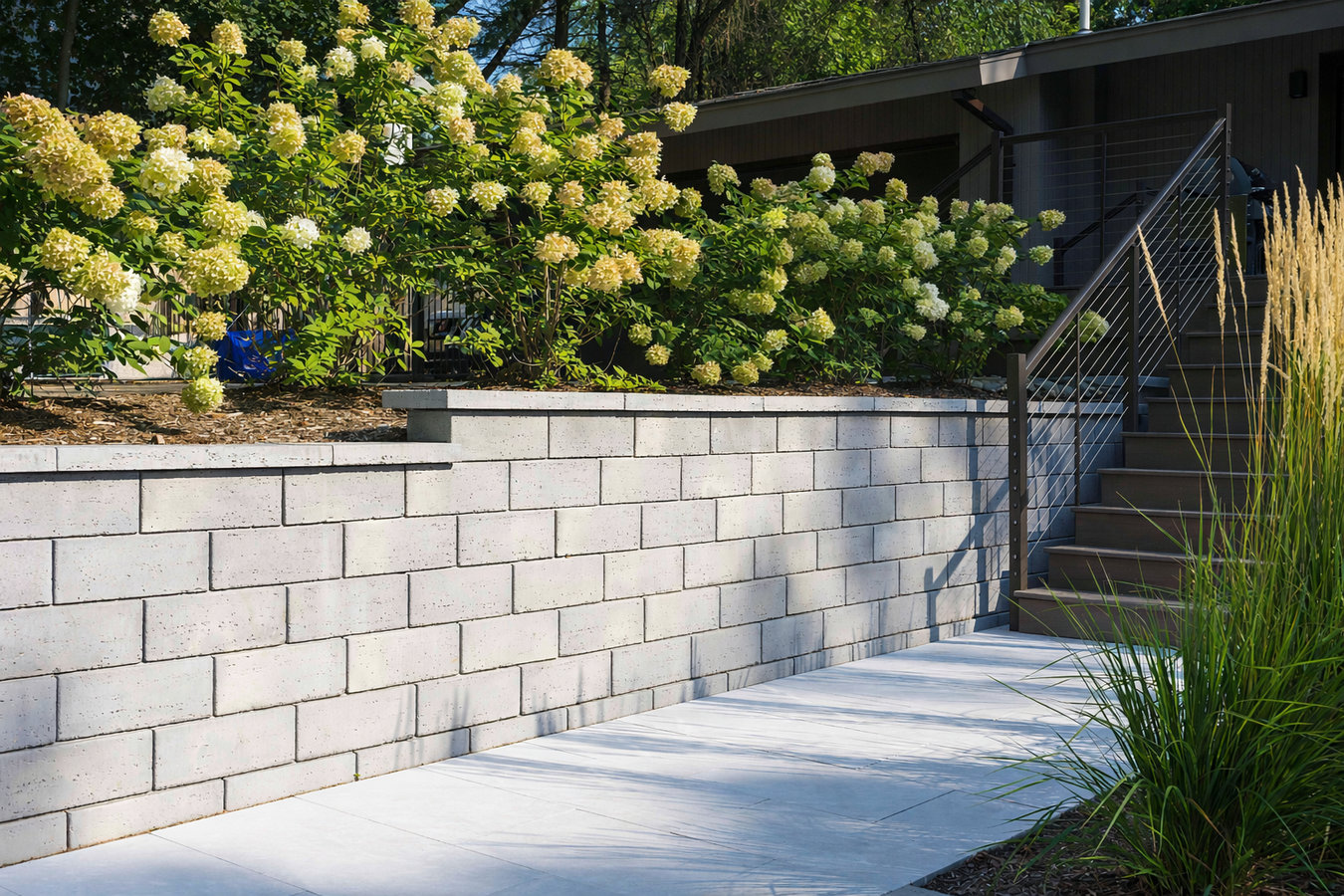
Concrete block walls in Champaign, IL are built by stacking and mortaring hollow or solid concrete units over a poured concrete footing - sized and drained to handle local clay soil movement and freeze-thaw cycles - with most residential garden or privacy walls completed in one to three days and retaining wall projects taking three to seven days depending on height and excavation.
The part you see is the easy part. What determines whether a concrete block wall stands true for decades or starts leaning after a few seasons is the footing depth, the mortar quality, and for retaining walls, how drainage is handled behind the wall. Champaign's Drummer silty clay loam - one of the most productive agricultural soils in the world - expands when it gets wet and shrinks when it dries. That movement never stops, and walls built without accounting for it show it quickly.
If you are dealing with a slope that needs to be held in place by a more engineered structure, our retaining wall construction service covers taller walls with deeper footing requirements and engineered drainage systems.
Stand at one end of your wall and look down its length. If it curves outward or leans instead of running straight and vertical, the wall is under stress - often from water or soil pressure building up behind it. In Champaign's clay-heavy soil, this kind of movement is common in retaining walls that were not built with proper drainage, and it tends to get worse each year.
Run your finger along the joints between blocks. If the mortar crumbles easily or has fallen out in spots, the wall has lost its structural bond. Champaign's freeze-thaw winters accelerate this - water gets into small cracks, freezes, expands, and breaks the mortar apart. Catching this early means a repair job. Ignoring it long enough means a full rebuild.
White, chalky deposits on a concrete block basement wall are a sign that water is moving through the blocks and leaving mineral deposits behind. Horizontal cracks along a mortar joint can indicate soil pressure pushing against the wall from outside. Both are worth having a mason assess before they develop into larger water or structural problems.
If soil washes out from a raised area after rain, or a slope near your home is eroding, a concrete block retaining wall holds that material in place permanently. This is especially common in Champaign yards where grading changes were made during landscaping or additions - those transitions often need structural support over time.
Most projects fall into new construction or repair. For new work, the process runs from permit through final inspection - footing excavation, concrete pour, block laying with mortar, drainage installation for retaining walls, and cleanup. For repair work, the approach depends on what the wall is showing: crumbling mortar joints can be repointed without touching the blocks, while sections that are bowing or have lost their structural alignment need to be partially or fully rebuilt. If you are also planning foundation block wall installation on your property, we can assess both walls in a single visit and coordinate the work.
The Mason Contractors Association of America publishes installation and safety standards for block wall construction that we follow on every project. The University of Illinois Extension has documented Champaign County's soil and drainage conditions in detail - the kind of local knowledge that shapes how we design footings and drainage for walls in this specific area, rather than applying a one-size approach from a warmer or less clay-heavy region.
Best for homeowners who want to stop soil erosion, level a sloped yard, or create a raised planting bed with a structure that will hold up through Champaign winters.
Suited for adding definition to your yard, separating outdoor spaces, or creating a privacy boundary - with block textures and heights selected to match your property.
For existing concrete block basement walls showing cracking, bowing, or water infiltration - repairs that stabilize the wall and stop damage from progressing.
A targeted option for walls where the structure is sound but mortar joints have worn down or fallen out - extending the wall's life without a full rebuild.
Champaign sits on flat glacial till with clay-dominant soils that drain poorly. After a heavy rain, water sits near foundations and wall bases longer than it would in almost any other region. A retaining wall built without drainage pipe and gravel backfill in this area is holding back both soil and water - and that water pressure is what pushes walls over from behind. Many of the failing retaining walls we see in Champaign's older neighborhoods were built without that drainage layer. Homeowners in Rantoul face the same flat-terrain drainage challenges and the same need for drainage-first construction.
The freeze-thaw cycle compounds the drainage problem. Champaign temperatures routinely drop below freezing from December through February, and the ground can freeze 30 to 40 inches deep in a hard winter. Water trapped near a wall base freezes, expands, and forces blocks out of alignment. Mortar joints that looked fine in October show cracks in March. Getting the footing depth and drainage right the first time is not optional in this climate - it is the entire job. This matters equally in communities like Mahomet where the same soils and seasonal conditions apply across the broader Champaign-Urbana metro area.
We visit in person before quoting - wall height, site drainage, and ground conditions all affect the scope and cost. You will have a written estimate within a few days of the visit. We respond within 1 business day.
Most retaining walls and many freestanding walls in Champaign require a city building permit. We handle the City of Champaign Building Safety Division application on your behalf. Work does not start until the permit is approved, and the finished wall gets inspected before the permit closes.
The crew digs the footing trench to the right depth for central Illinois frost conditions, forms it, and pours concrete before any blocks go up. This step is what determines whether the wall stands level for five years or fifty. It is unglamorous but non-negotiable.
Blocks go up row by row with mortar and constant plumb checks. For retaining walls, gravel backfill and drainage pipe go in behind the wall as it rises - a step that relieves water pressure and is the single most important detail for long-term performance in Champaign's clay soil.
We come to your property, assess the site, and give you a clear written quote - no obligation and no pressure to commit.
(217) 316-8581Champaign's Drummer silty clay loam expands when wet and contracts when dry - that seasonal movement puts pressure on footings year after year. We dig to the depth and width needed for local soil conditions, not just the code minimum. That is the detail that keeps block walls from cracking and shifting after the first few winters.
Retaining walls fail when water builds up behind them. In Champaign's flat terrain and clay soil, that pressure is higher than in hillier cities. Every retaining wall we build includes gravel backfill and drainage pipe installed as the wall goes up - not patched in afterward. You will not be watching your wall lean toward you in year three.
Navigating Champaign's permit requirements for structural walls can feel overwhelming. We handle the City of Champaign Building Safety Division application, coordinate the inspection, and close out the permit paperwork so you have a clean record on your property. You just approve the plan and we take it from there.
You will receive an itemized written estimate covering excavation, footing, block material, drainage, and cleanup before any commitment. If anything unexpected comes up during the dig, we discuss it with you before it changes the price. A low quote that does not mention drainage or footing depth is worth questioning.
When the footing is right, the drainage is built in, and the permit is on file, you end up with a wall that does its job for decades without drama - and that is exactly what a concrete block wall should do.
Structural block wall work at the foundation level - a heavier-duty application of the same material and technique used for landscape walls.
Learn MoreEngineered retaining walls for slopes and grade changes that go beyond standard block wall construction, including taller walls with deeper footing requirements.
Learn MoreChampaign contractors book up fast once the ground thaws. Call or send a message today and we will get a visit on the calendar before the season closes.