
Loading...
Cracked mortar, spalling bricks, and stair-step cracks get worse every freeze-thaw season. We find the real cause, match your existing materials, and repair it correctly the first time.
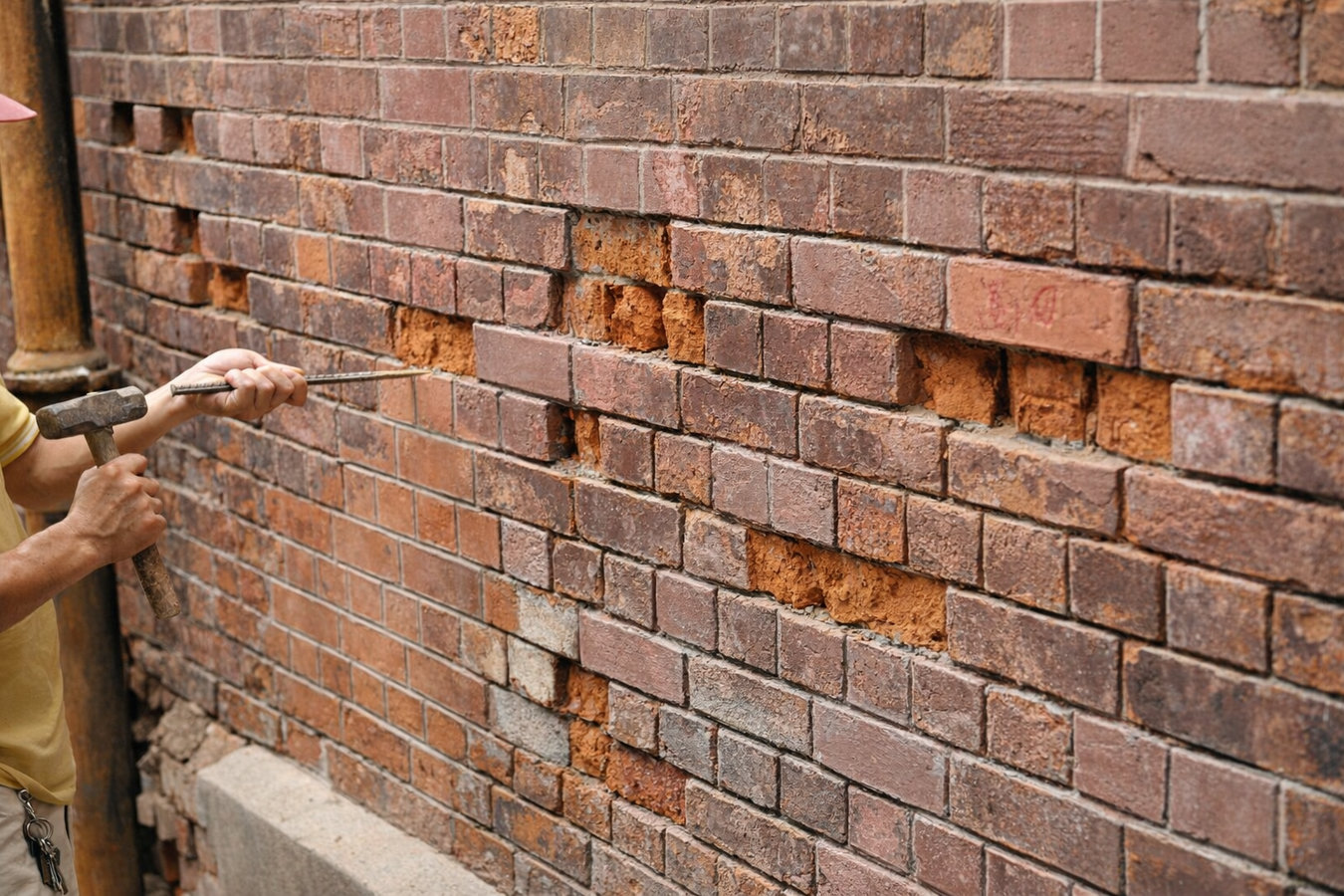
Brick repair in Champaign, IL addresses damaged mortar joints, cracked or spalling brick faces, stair-step wall cracks, and chimney deterioration - using matched materials so the repair blends in and holds up, and most residential jobs wrap in one to three days.
Most brick repair in Champaign comes down to one of two things: mortar that has worn out and needs to be replaced, or individual bricks that have been damaged by water and freeze-thaw cycles and need to be swapped out. The tricky part is that both problems look similar from the street, and doing the wrong repair can make things worse. Hard modern mortar on older soft brick is a common example - it transfers stress into the brick face rather than absorbing it, and the brick starts to crack.
When mortar failure is the primary issue and the bricks themselves are still intact, our tuckpointing service handles joint removal and replacement across a full wall or section. If you are not sure which applies to your home, an in-person assessment will tell you quickly.
Chalky white streaks or patches on your brick surface are mineral deposits left behind as water moves through the wall and evaporates. It is not dangerous on its own, but it tells you water is getting in through failing mortar joints or cracked brick - and that is worth addressing before the damage goes deeper.
Cracks that follow a diagonal stair-step pattern through mortar joints often mean the wall has shifted slightly. In Champaign, this shows up because the clay-heavy soil under homes expands and contracts with seasonal moisture changes. It does not always mean a serious structural problem, but a mason should evaluate the pattern.
If pieces of the brick surface are popping off or the face looks rough where it used to be smooth, that is freeze-thaw damage. Champaign winters - with their repeated above-and-below-freezing swings - are a common cause, especially on older bricks that have absorbed decades of moisture.
Run your finger along the joints between your bricks. If the mortar feels soft, crumbles easily, or has gaps where it has fallen out, repointing is needed. This kind of wear is especially common on Champaign homes built before 1980, where the original mortar has reached the end of its lifespan.
Our brick repair work starts with understanding what is actually causing the damage. Mortar joint repointing is the most common job on Champaign homes - worn joints are the entry point for water, and sealing them correctly stops the damage cycle. When individual bricks have spalled, cracked through, or shifted, we remove and replace them with materials matched closely to the existing wall in color and texture. For homes with stair-step crack patterns - common in Champaign because of the clay-heavy soils that shift with seasonal moisture - we repair the affected joints and address drainage issues that may be driving the movement. We also handle chimney brick and mortar repairs together, since treating only one part of a chimney that has suffered combined damage rarely produces a lasting result.
Matching materials correctly is the most important part of any brick repair. The Brick Industry Association is clear that mortar should always be softer than the surrounding brick - a principle that matters especially on Champaign homes built before 1960, where the original brick is softer than modern materials. If you also want to explore structural wall options where the brick is beyond practical repair, our driveway pavers and hardscape services can help you replace exterior masonry surfaces that have taken more damage than spot repair can address.
For walls where mortar has eroded, crumbled, or fallen out - the most common brick repair job on Champaign homes.
For individual bricks where the face has popped off or the brick is too damaged to hold mortar - we source a close color and texture match.
For walls showing diagonal crack patterns caused by slight foundation movement or clay soil expansion and contraction.
For chimneys where weather exposure has damaged both the mortar joints and the brick faces - addressed together so the repair lasts.
Champaign sits in central Illinois where temperatures cross the freezing point many times each winter. Every freeze-thaw cycle pushes moisture into cracked mortar joints, expands it, and widens the gap. On top of that, Champaign's clay-heavy soil expands when wet and shrinks when dry, which causes very slight but repeated wall movement - the main driver of stair-step crack patterns on older brick homes here. Homeowners in Champaign and Danville tend to see this combination of freeze-thaw and soil-movement damage on brick more often than homeowners in more temperate parts of the state.
A large share of Champaign's housing stock was built between the 1940s and 1970s. Brick from that era - whether full-brick or brick-veneer construction - has had 50 to 80 years of weathering, and many of these homes are now at the age where repair is overdue rather than optional. Buying an older home in one of Champaign's established neighborhoods and finding that the brick has never been professionally assessed is common. Getting that assessment done early almost always costs less than dealing with the damage after one more winter has widened the cracks.
Tell us what you are seeing - cracks, flaking bricks, staining, or something else. We ask a few basic questions about your home and schedule an in-person look. We respond within 1 business day.
We walk the affected areas and look at what is causing the damage, not just the visible symptoms. You receive a written estimate before any work is scheduled. For structural repairs, we confirm whether a City of Champaign building permit is required.
The crew removes damaged mortar or bricks, sources matched replacement materials, and packs in new mortar suited to your existing wall. For older Champaign homes, matching mortar softness to your brick type is the most important part of the job.
We clean the work area before we leave and walk you through what was done. New mortar needs a few days to harden - avoid spraying water on the repaired area for at least 48 hours, and hold off on any sealant for four weeks.
We respond within 1 business day. Written estimates before any work begins. No surprises, no pressure.
(217) 316-8581Many Champaign homes were built with softer brick and lime-based mortar. Using hard modern mortar on those walls cracks the brick face over time. We assess your existing wall and use a mix suited to your specific brick - not a one-size-fits-all product.
Structural brick repairs and chimney rebuilding in Champaign may require a permit from the City of Champaign Building Safety Division. We handle the permit application when your job requires one - you do not have to figure out the paperwork, and the work goes on record correctly.
We have been repairing brick across Champaign and surrounding communities since 2020. We know which neighborhoods have the oldest housing stock, how local clay soil creates stair-step cracking, and what materials hold up through Champaign's freeze-thaw winters. That local knowledge shapes every repair we do.
We carry liability insurance and workers compensation coverage. Ask to see our certificate - we provide it without hesitation. In Illinois, masonry contractors are required to carry coverage, and working with one who does protects you if anything unexpected happens during the job.
When we finish a brick repair job, we walk you through what was done and explain what to watch for going forward - in plain language, not trade talk. You will leave the conversation feeling informed, not just invoiced.
Replace or install a brick or stone paver driveway that handles Champaign's freeze-thaw cycles better than standard concrete.
Learn MoreWhen mortar joints are the main issue and the bricks themselves are intact, tuckpointing restores the wall without replacing any brick.
Learn MoreCall now or request a free estimate online and we will come out, assess the damage, and give you a written quote - no obligation.